Beyond the Tourist Trail: A Fire Ceremony in a Hidden Guatemalan Cave
There is a specific kind of vulnerability that comes with traveling alone. When you step off a plane in a country like Guatemala, stripped of your usual support system, your senses heighten. Every smell of woodsmoke, every vibrant textile, and every greeting feels more acute. I was there on a site visit: a solo mission to ensure that the experiences we offer at Wonder to Wander Travel are not just "trips," but true immersions.
I was looking for something deeper than the standard tourist circuit. I wanted to find the pulse of the highlands, the places where the ancient world doesn't just exist in ruins, but breathes in the present day. That search led me to Alex.
The Connection: Alex and the Journey Upward
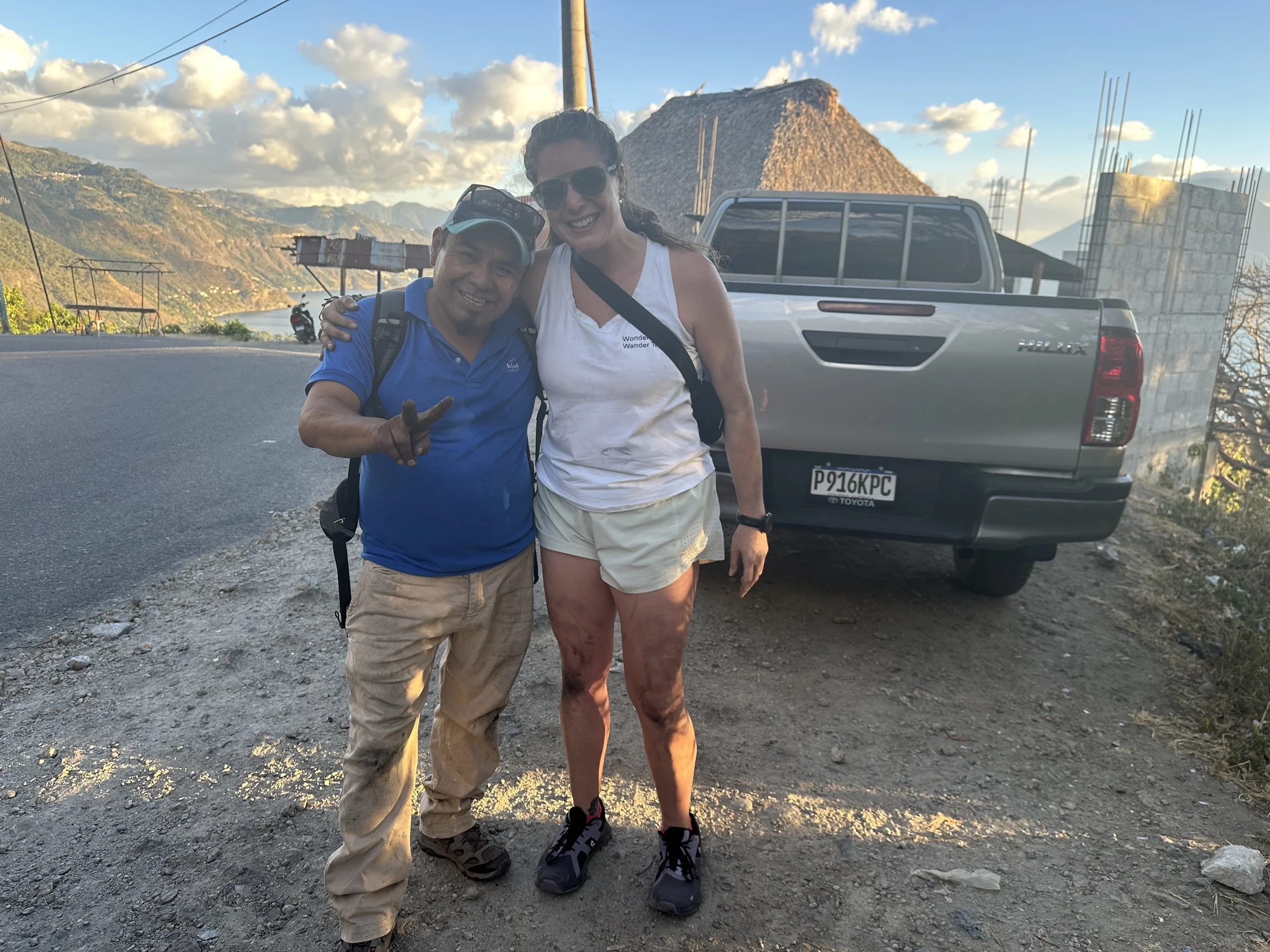
Alex picked me up in a weathered van, and within minutes, the professional distance of "guide and client" vanished. He spoke English well enough for us to have a meaningful conversation, which allowed us to dive straight into the heart of things. We talked about history, family, and the spiritual landscape of his home.
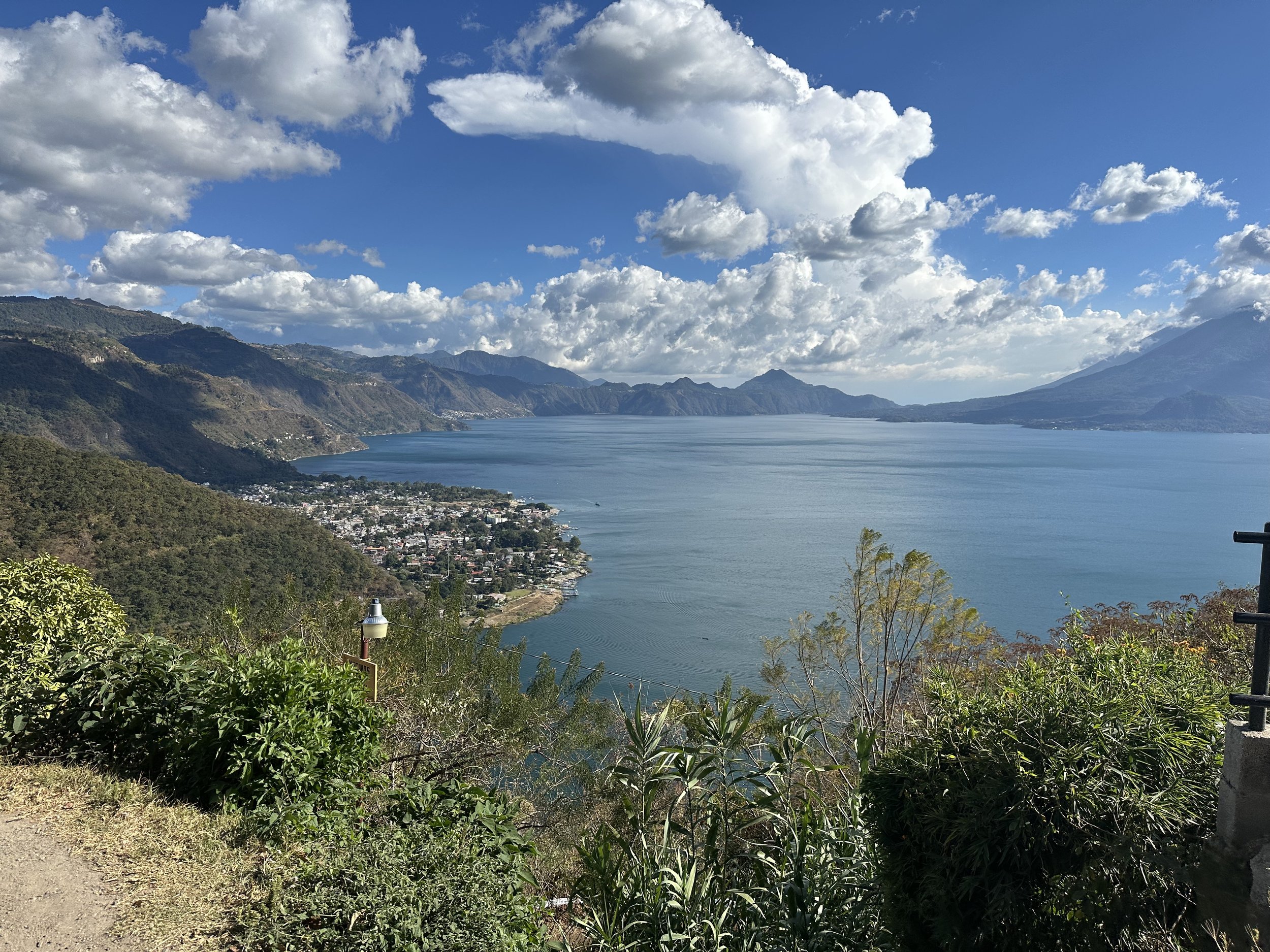
As we wound our way up toward a high bluff, the air grew thinner and cooler. When we finally stopped, the view took my breath away. We were standing on a precipice overlooking Lake Atitlán, one of the most majestic landscapes in Guatemala, ringed by Volcán Atitlán, Volcán Tolimán, and Volcán San Pedro. Formed by a massive volcanic eruption thousands of years ago, the lake has a presence that feels both dramatic and deeply still.
For many Maya communities around Lake Atitlán, especially the Tz'utujil and Kaqchikel Maya, the surrounding volcanoes are sacred, and the connection to the land is still deeply felt today. Ceremonies and prayers are still practiced here, and that spiritual relationship with the mountains, the lake, and the landscape remains a living part of daily life.
Standing there, I felt a profound sense of scale.
The Preparation: Eggs, Tablets, and the Descent
Before heading to the ceremony site, we made a quick, humble stop at a small window tucked behind a woman's home on the hillside, where locals regularly come to buy altar products. There were no flashy signs or souvenirs here, just the essentials for ceremony and prayer. We bought fresh eggs, and the moment stayed with me because it was such a direct way to support a local woman and, in turn, the community around her. To an outsider, it might have seemed like a simple errand, but in the context of a fire ceremony, these eggs are a vital symbol of life, fertility, and the absorption of energy.
From the hillside home, we walked down a narrow path that felt like it was leading us into the earth itself. Then, the opening appeared: a giant, deep cave.
This wasn't a "show cave" with paved paths and electric lights. It was raw and limestone-cool, with shadows that stretched back into the darkness. As my eyes adjusted, I saw them: multiple shrines and altars tucked into the recesses of the stone, some blackened by years of ritual smoke, others bright with fresh flowers and candles. This cave has been a place of worship for generations, a tradition that has remained unbroken for thousands of years.
The Ritual: Questions and the Altar of Fire
Alex didn’t just start the ceremony. He sat with me first. He asked me questions: deep, probing questions about my intentions, my life, and what I was seeking. I wrote my answers down on a small tablet, my pen scratching against the paper in the silence of the cave.
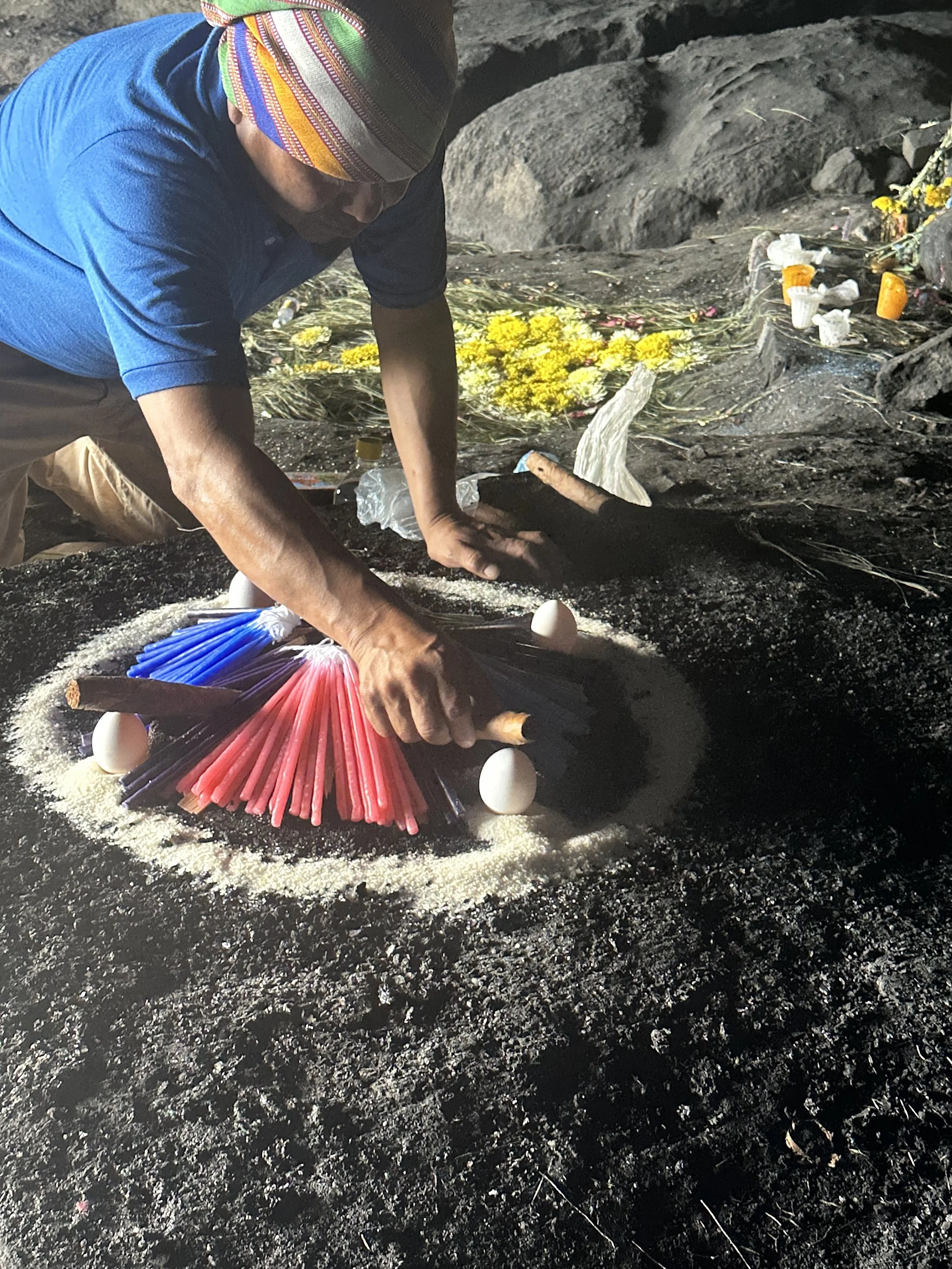
Alex began to build the shrine, incorporating the very essence of our conversation into the arrangement. It was a meticulous process: using sugar, candles of every color, cigars, tobacco, and the eggs we had just purchased.
As he began to chant, the atmosphere in the cave shifted. The "vibe" became heavy and sacred, the rhythm of his voice echoing off the damp walls. He took the answers I had written and wove them into the prayers. Before he lit the fire, Alex paused and asked permission from the four directions — East for sunrise, beginnings, and fire; West for sunset and transformation; North for ancestors and wisdom; and South for growth, connection, and life. Then, he lit the altar.
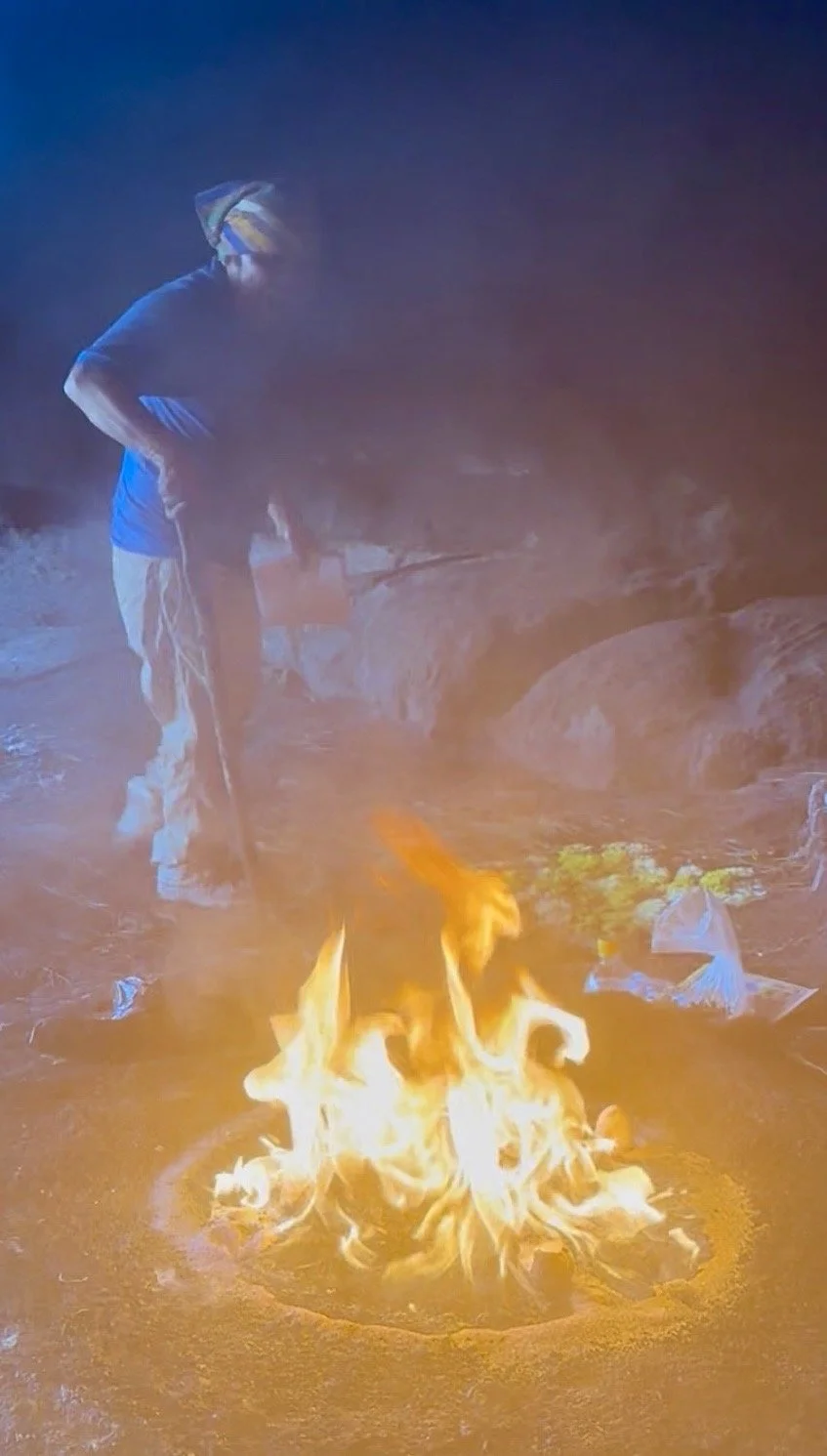
The flames licked upward, casting dancing shadows against the cave ceiling. We sat there for a long time, the heat of the fire competing with the cool subterranean air. And then, it happened: something I had never witnessed before.
One by one, the eggs began to explode.
In Mayan tradition, when the eggs pop in the fire, it’s often seen as the release of energy or the acceptance of an offering. To see it happen in that ancient, silent space was jarring and magnificent all at once. It was a blunt, realistic reminder that I was participating in something far beyond a typical "travel experience." This was a living, breathing connection to the divine.
Why We Go Deeper
I spent about an hour and a half in that cave. By the time we emerged back into the sunlight, I felt different: lighter, perhaps, but also more grounded. It remains one of the most inspiring and amazing memories of my life.
This is why I do site visits alone. This is why I vet every guide and every experience personally. If I had been on a mass-market tour, I would have seen the mountains from a bus window. I would have never met Alex. I would have never known the secret language of a fire ceremony or the significance of an exploding egg in a mountain cave.