
When you bring home a souvenir, what do you want it to remind you of?
The place, of course. Maybe the color of the afternoon light or the sound of a conversation you didn’t want to end. But I also hope it reminds you of the person who made it, and the choice you made to buy from them.
For me, that choice is more than a nice detail at the end of a trip. It’s part of how I want to travel: with care for the people who welcome us, and with a little more thought about where our money goes.
The difference between buying something and meeting its maker
A souvenir can be beautiful and still feel disconnected from the place you visited. You pick it up in a large store, pay, and move on. There’s nothing inherently wrong with that, but sometimes you don’t know who made the item, or whether your purchase supports anyone you met along the way.
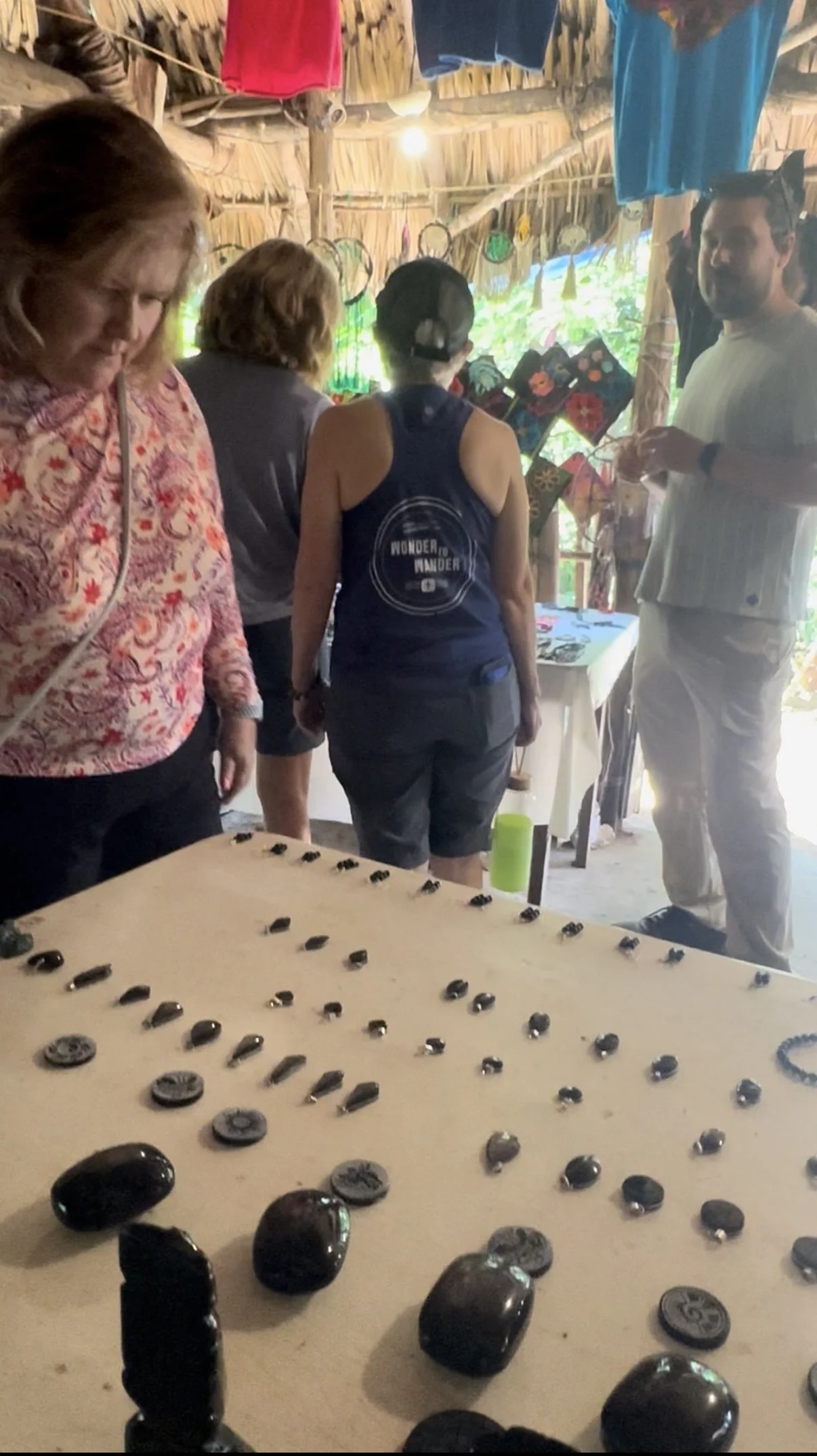
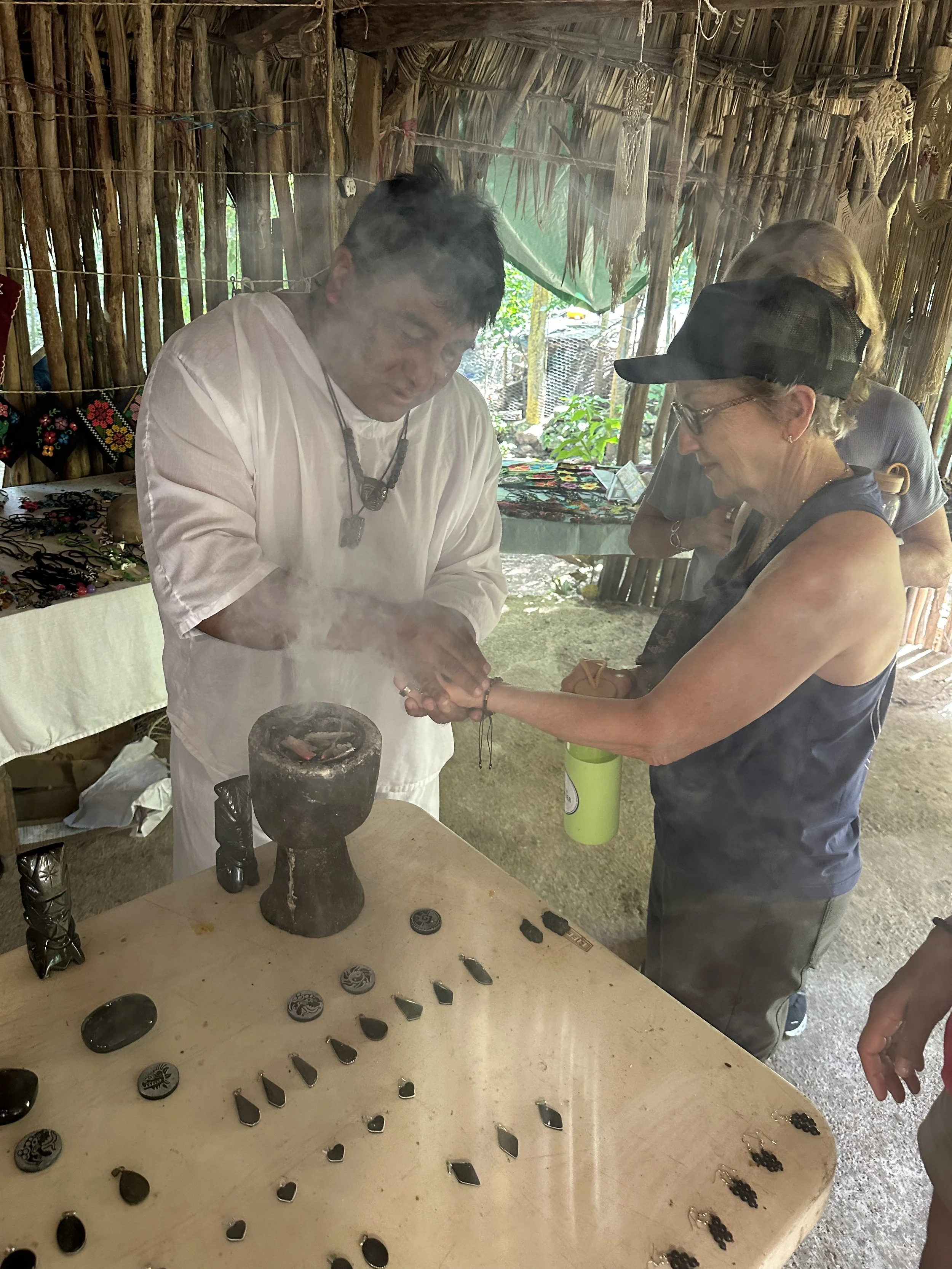
When I can, I prefer a more personal connection. In Tulum, we buy directly from a shaman and his family. He performs the ceremony and will bless our obsidian stones, and his family makes the souvenirs we bring home. Supporting them means supporting the whole family.
I don’t want to overstate what one purchase can accomplish. I can’t tell you that buying one item changes a community or solves a larger challenge. What I can say is that buying directly matters to me because it helps keep money in the hands of local families rather than large stores, hotels, or corporations.
That choice reflects a promise I want our travel experiences to honor. We work with local guides and families, and we want the connections we make to feel personal, not like an experience that could have been copied and delivered by a large company.
A blessing becomes a memory
On our last trip, our guests bought bracelets, and watching the shaman bless them was something special to witness. It wasn’t my purchase, but I felt the weight of the moment all the same: travelers carrying home something with a story attached to it, and a family whose work was honored in the process.
That’s the difference I see when we buy directly. The object becomes part of a relationship, however brief, rather than just another thing in a bag.
It also reminds me that local connection doesn’t always have to be grand or complicated. Sometimes it means meeting the person you’re buying from, learning that a family makes the souvenirs, and choosing to purchase from them rather than from a large store or hotel. There’s no need to turn that into a dramatic claim. It’s simply a choice that aligns with how I want to travel.
And if you’re unsure where to begin, you can start with a question: Who made this? If it feels appropriate, ask whether you can buy directly from the maker. The answer may help you understand the item, and your purchase, a little differently.
A memory from our first trip
On our first trip, we gave food to local families we saw along the way. It was such a good feeling to be able to help, even in a small way, and to feel that we were supporting a community as it kept its roots and culture alive.
I hold that memory carefully. It isn’t a story about arriving somewhere with all the answers, and it isn’t a claim that a single gesture can do everything. It’s a reminder of the human side of travel: we meet people, we notice one another, and sometimes we have the chance to respond with generosity.
I used to buy from every place I visited. I loved the idea of having something from everywhere, but I never had enough space for it all, and some of my purchases were last-minute buys from the airport, chosen more to check a box than to mean something. Over time, my travel has changed. Now I would rather make one special purchase from a local market or the person who made it than fill a suitcase with things I barely remember choosing.
That’s also why I care about who we work with and where we spend money. I want our trips to make space for local guides and families, and to help guests feel that they’ve encountered a place through people, not only through its landmarks.
Buying direct isn’t a magic label
I believe in buying directly when we can, but I also think it’s important to be honest about what that does, and doesn’t, mean. “Direct” shouldn’t be used as a shortcut for a sweeping promise about impact. It doesn’t tell you everything about a product or every part of a local economy.
For me, it describes a meaningful choice: we buy from the shaman and his family rather than from a large store, hotel, or corporation. He performs the ceremony and blesses our obsidian stones, and his family makes the souvenirs, so the support reaches the whole household. That is a connection I can explain plainly, and it is part of how I want to support local families and keep money in local hands.
As a traveler, you don’t have to approach every purchase like an investigation. But a little curiosity can help you make a choice you feel good about:
Ask who made the item, if the moment feels right.
When possible, buy directly from the maker or family.
Choose something because it means something to you, not because you feel pressured to bring something home.
Be open to the story behind the purchase, while letting the maker decide what they want to share.
You may leave with a bracelet, a stone, or nothing at all. The point isn’t to buy more. It’s to notice the people behind what you’re seeing, and to make thoughtful choices when you have the opportunity.
If food and shared experiences are another way you like to connect with a place, you can also read Why We Eat Together: How Food Connects You to a Place.
Travel with room for real connection
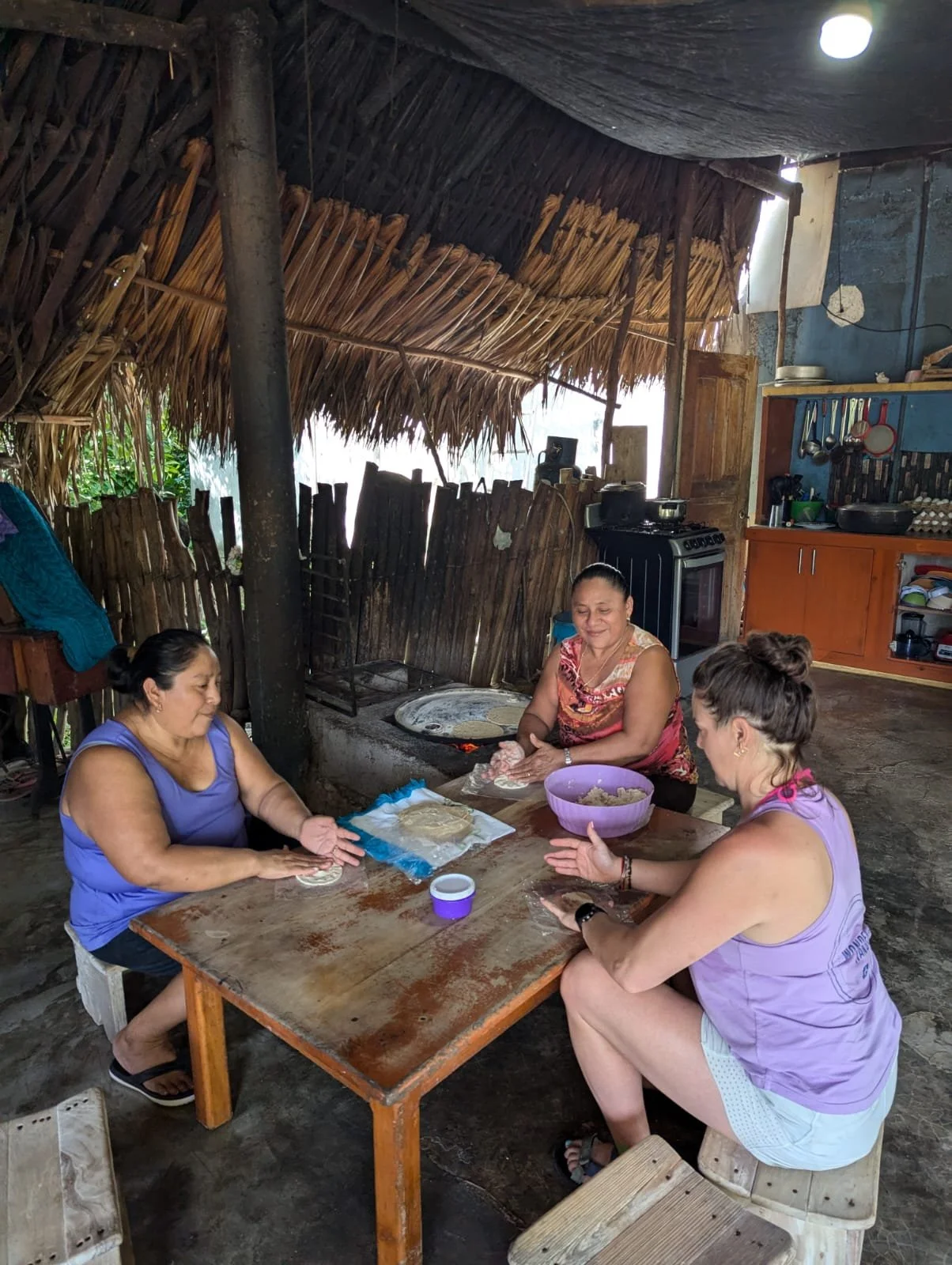
When I design trips now, I think about more than where we’ll go. I think about who we’ll meet, which local relationships are part of the experience, and whether the pace leaves room to be present. Those details matter to me because they make a trip feel less like a checklist and more like an invitation to connect.
Our Tulum: Ancient Ground, Living Culture retreat is coming up in April 2027. It’s one way to experience Tulum through curated moments of culture, local connection, and time to slow down. I’d love for you to explore the retreat and see whether it feels like the right fit.